
Бесплатный фрагмент - Replacing harmful habits with ability development
Without willpower, without suffering and without visiting a specialist: only psychotechnologies
Instead of Preface
What will we do and how does it work?
Never try to quit a bad habit outright — it’s better to replace it. If you don’t, your subconscious will find its own substitute. When you quit smoking, for instance, you’ll likely start overeating. That’s because smoking and eating both engage the same mechanism — the sucking reflex. In newborns, this reflex is innate: they feed while sucking on their mother’s breast. At that moment, the child feels no anxiety or discomfort. Short-sighted parents exploit this by giving their child a pacifier just to keep them quiet. This parental weakness increases the child’s risk of developing a tendency to smoke later in life. As adults, these instincts remain, buried deep in the subconscious.
Remember:
• Your subconscious is your pre-conceptual self — the infant within you. It’s pure, honest, and carries a lifetime of memories. What once terrified you still terrifies that inner child.
• Most people tend to overeat, though everyone is different. Some may find other substitutes more fitting.
• Bad habits shouldn’t be fought against — they should be replaced with good ones. This book about it.
Chapter 1. Why replace instead of eliminate?
Because your bad habits are integral part of who you are. They’re pieces of the same construction that makes you you. Every feature — from your talents to your weaknesses — is a brick in that wall. You can’t just pull a brick out and throw it away without consequences. Your body and mind will search for a replacement. And the brain, being efficient, always chooses the shortest path — the simplest, most accessible option. Just like a baby always reaches for the nearest shiny toy.
Because:
• If you simply block the flow of water, it will find another way — flooding somewhere else. The same is true here: habits don’t just disappear. You can’t just “turn off the tap.”
• Redirect your “water” toward something useful — to build new, healthy qualities or habits. Have you long dreamed of becoming someone, learning something, doing something meaningful?
• Choose consciously — otherwise your subconscious will choose for you, like a child.
Why do children love sweets so much? Because sugar delivers quick, easily accessible energy: sugar → glucose → energy. The child’s brain thinks: “Why spend so much effort digesting all these boring vegetables when sugar gives me energy instantly?” Chocolate and meat belong to the same “high-reward” category. So, compared to sweets, porridge doesn’t stand a chance — it requires effort. The brain always picks the easy route.
It’s the same with smoking. If you don’t replace it with something, your brain will demand its cigarette. Why would a child give up a toy? The child doesn’t care that it’s poisonous. If you’re disciplined, hard on yourself, have good willpower or simply have no access to cigarettes, your subconscious will quietly look for another “brick” to replace the missing one in your internal wall — something close, easy, and accessible, just to prevent the whole wall from collapsing. That’s how it all works, simply put.
Summary:
Your subconscious is your inner child. If you don’t choose what to replace a harmful habit with, it will choose for you — usually something easier and more harmful. If you consciously assign the right substitution (for example, channeling an addiction into developing a useful talent), your subconscious will start making that exchange gradually — over the years.
Chapter 2. How to define what to change
The simplest psychotechnologies — 15 minutes a day
You’ll need:
1. Avoid alcohol or any substances that affect your mind for 175 days. This is desirable but not mandatory. If you do use such substances, wait until withdrawal symptoms subside.
2. Ten to fifteen minutes of your time each morning or evening.
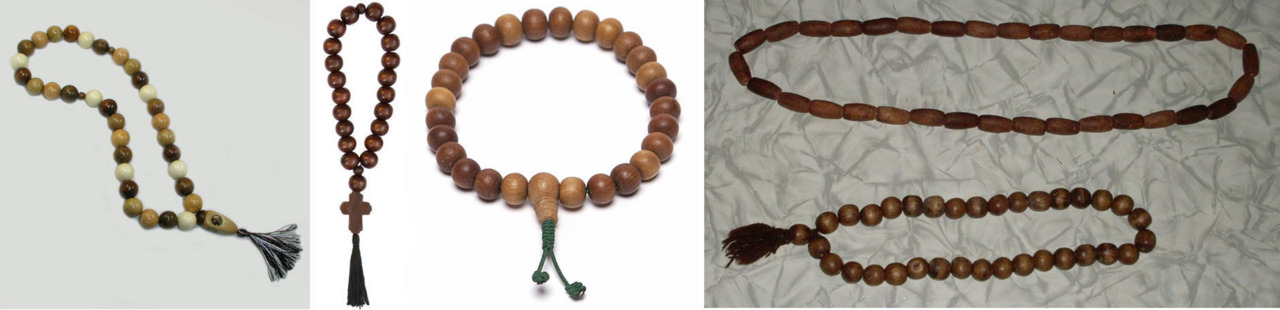
3. A short wooden prayer beads and a pocket calendar — or download the mobile app (link at the end of the book), which replaces the prayer beads with simple games.
Why is it not recommended to take intoxicating substances during the course of reprogramming the subconscious?
Because when you are sober and when you are under the influence of such substances, you are essentially different people. If you get rid of an addiction (smoking, for example) while sober, you will most likely keep smoking when intoxicated. Your states under different substances come with their own habits and values. You could say that you and you under alcohol or other mind-altering drugs are different versions of the same person.
If you have been drinking, do not try to continue your training. For your drunk version, it will be like the first time. It’s as if a university suddenly started teaching final-year subjects to people off the street who only look like bachelor’s students.
And that’s not the only reason. The main danger is that your vices are alive and have their own “intelligence.” It’s you. They will resist. Yes, you will resist yourself. As soon as your harmful patterns understand which practices will force you to stop reinforcing them, you will immediately feel a strong urge to keep doing the things that slow the replacement of bad habits with useful ones.
You are made up of automated brain programs. Your bad habits are programs just like the useful ones. And they too are programmed to exist and fight for their right to survive.
Simply put, you will suddenly feel a strong urge to continue taking whatever caused the pause. So you can veer off your normal life path because of alcohol. Or get hooked on antidepressants. People say cannabis isn’t a drug, but psychological dependence on marijuana hasn’t gone anywhere. It’s worse than gambling addiction because after long-term cannabinoid use, suffering can be felt physically, too. Everything in a person is interconnected. Substances are substances; chemistry is chemistry. If you smoked marijuana while fighting your addictions and took a break, the urge to keep using marijuana products will become hypertrophied.
And so it will be with any substance that affects the brain, pushing you to pause on your way from harmful to useful.
It’s easier to hold out for six months than it seems. For example, most pregnant women go through pregnancy and nursing without cigarettes and alcohol. Is your wife pregnant? That’s a good reason for you not to drink for at least six months. The use of tobacco products is not prohibited due to their low impact on consciousness change.
Conclusion:
If you can’t refrain from any intoxicant for six months, you shouldn’t start working on yourself with this method. IT’S DANGEROUS! There’s too high a chance that while trying to get rid of a minor bad habit, you’ll strengthen a more dangerous one. If you used to drink once every couple of months only on holidays, now you’ll subconsciously start leaning toward more frequent random occasions. And they’ll appear, you’ll see. As if by magic.
There is no magic. That’s how your brain works. More naïve people even dream up theories about smart energy fields that allegedly fight for their adherents, who serve as batteries. These fields (egregors) supposedly arrange things so that you don’t leave their sphere of influence. For example, gamblers and addicts are “sent” visitors at just the right time. Friends with free booze suddenly start visiting an alcoholic who has decided to quit, and old buddies with easy schemes or debt claims start visiting a criminal.
These are esoteric fables for people who believe in horoscopes and numerology. In reality, this struggle happens only inside you. People tend to seek explanations, and everyone finds them according to their development and worldview. They make up gods. Or egregors. Or brownies, goblins, and guardian angels.
You will begin, unconsciously, to arrange such situations for yourself. And no one else.
If you couldn’t resist and still took substances that alter consciousness and perception, wait for the withdrawal to pass and then continue the course. It is forbidden to practice while in an altered state of consciousness.
Really need to spend 10—15 minutes a day?
Yes. Approximately. People are different and there are no strict limits. It depends on the individual. Some complete the task faster; others take a little longer. At first, due to inexperience, it may take 20–30 minutes, but as you become familiar with the process, you’ll do it automatically.
Some people will reduce the time significantly by automating the process, while others will increase it because they savor and enjoy it. Some will choose to do it both morning and evening. However, most people are too busy and will find time for only one session. It can be especially challenging to get used to it at the beginning. Try to stick with it for at least a month. You’ll get used to it.
It is better to add the app to the screen of your smartphone or tablet. It will remind you every day for six months at the time you specify.
Do whatever is most convenient for you. This kind of psychotechnology is just a starting point that has to be customized for each person and their needs. It’s very hard to harm yourself with these techniques. This guide uses simple methods of working with the subconscious that don’t require intense concentration or strong willpower.
These are techniques for ordinary people with ordinary weaknesses. For those who couldn’t do it otherwise. Do you break diets? Drive yourself into hysterics and pick fights with loved ones to justify a cigarette? Can’t keep foul language from slipping out? Constantly chew your hair? Bite your nails? Pick your nose? Cut yourself to replace mental pain with physical pain and get hooked on it? Can’t force yourself to start doing something? Have you long wanted to master solfeggio? Learn electronics? Start a business? Then replace smoking with talent in business or creativity. After a while, you’ll notice that you’ve become interested in learning what you never got around to before, and the bad habit will quietly leave without torment.
Does it sound too good to be true? That can’t happen, right? Just try the methods below and you won’t even notice the change happening.
No, your destructive habits won’t vanish immediately after completing a six-month program. After six months, an antivirus program for your brain will be created. It will launch and begin to transform you over several years.
For example, smoking usually goes away before alcoholism. You’ll start smoking and drinking less and less until you realize you can do without them. The difference is that when you quit, there won’t be willpower-based suffering.
Deadlines:
Psychological habits without chemical dependence, such as gambling addiction, go away faster than smoking and alcoholism. It takes from a year to five years to quit smoking tobacco and nicotine-containing substances, depending on other aspects of a person’s psychology. Alcohol addiction can take up to ten years to disappear, and for some people it may never go away. Everyone is different.
This method hasn’t been used on drug addicts, so there are no results. I can only assume recovery would take even longer than with alcoholism. Still, over time, your program will begin to work.
The program works much faster in youth than in adulthood. The younger the person, the easier it is for the internal antivirus to do its job.
And most importantly:
You decide whether to trust this method at your own risk. Have you tried to lose weight but misread the instructions, made mistakes, and ended up gaining more? Yes, it happens. Especially with people who set the goal of avoiding sweets, flour, and fried foods instead of setting the goal of losing weight — deciding for their bodies how to achieve it.
This is the most common mistake. Define the end goal, not the intermediate steps.
Maybe you want to lose weight, not overcome a craving for cakes. Maybe you want to marry and have a family, not lose weight. Maybe cakes and your figure have nothing to do with it. Maybe the problem lies elsewhere.
If you set false goals, nothing will work out.
You can have a happy family and still eat cakes. Don’t believe the standards imposed on you by glossy ads. The authors of this deception just want your money. Stop blaming your problems on thigh fat or cakes.
What about physical education, exercise, and sports?
First, stop calling a morning jog “sports” if you’re not a professional and don’t compete.
Second, you need to learn how to exercise properly. If you haven’t moved for years, have a sedentary job, and rarely go for walks, it’s pointless to promise yourself you’ll start running around your neighborhood after your vacation or sign up for fitness classes in the New Year. You’ll either never start or won’t keep it up.
If you struggle with physical activity, remember: you don’t actually need it — or you wouldn’t have motivation issues. If you truly needed it for yourself, motivation wouldn’t be a problem. If you can’t force yourself to exercise or go to the gym, it’s because you think others consider you overweight and that makes life harder. People often blame their failures on weight, but the real problem is elsewhere. Many people actually prefer a chubby partner to a slim one; it’s not about body shape.
Your subconscious isn’t as foolish as your consciousness, which is plagued by TV-induced insecurities. So it doesn’t want to suffer through nonsense that won’t help you. If you’re overweight or have other physical flaws, you may not be able to charm the person you like. But why assume you could do it without those flaws? Why blame your appearance? Perhaps you’re afraid to admit the problem isn’t your looks.
Your subconscious will never approve what you don’t truly need. It sees the truth like a child sees adult self-deception and hypocrisy — things adults have grown used to.
You are unlikely to continue needless self-torture. This is a protective mechanism formed in us since primitive times. I call it the right kind of laziness. There are two types of laziness you need to know: laziness of the body (the right kind) and laziness of the brain (the wrong kind).
Laziness of the body makes the brain work.
It drives civilization’s progress. This laziness made humans pick up a stick, tame fire, and invent the wheel. It also helps us conserve resources instead of wasting them on useless projects. It’s your safety net. When you don’t truly need something, you can force yourself to start, but your smart, productive laziness will eventually prevail.
Laziness of the brain makes people work themselves to the bone at two or three low-paying jobs.
Just to make ends meet. Brain laziness doesn’t seek a way out of the rat race; it just keeps your feet busy. It’s brain laziness that makes you chase fashion trends on TV and try to look like the models on glossy covers. It’s brain laziness that makes you try to start running in the mornings.
Fortunately, millions of years of evolution and the common sense of your subconscious will overcome this silly impulse. In a week or two, you’ll decide to sleep a little longer “this time.” And the next. Only those who truly need the gym keep going.
The same problem applies to buying a home exercise machine.
People can’t start exercising consistently. Usually, buying a machine follows this pattern: the buyer decides to start a new life on Monday (in spring, at Christmas, in the New Year, after the birth of a child, after moving) and goes to a store or website to choose the coolest machine. On the very first evening, she works herself to exhaustion on it, and for the next few days she somehow “doesn’t get around to it.”
How it works:
1. Muscles start aching from lactic acid, which was produced quickly in an untrained body due to a lack of oxygen in the muscles. A new thing arouses interest, and a person uses it uncontrollably. The subconscious “child” quickly gets bored of the machine.
2. The human brain is moody and lazy. It always follows the path of least resistance. The subconscious doesn’t like morning muscle pain. Pain = bad. Motivation deep in the brain abruptly shuts down. The machine’s buyer will constantly invent excuses and “urgent” tasks not to approach the machine today: “Tomorrow for sure.” And so it goes, week after week. If an infant bumps, cuts, or burns themself while exploring, they’ll avoid that thing for a long time.
Eventually, the machine becomes a clothes hanger and a toe-stubber in the dark. After a few years, it gets sold at a yard sale.
If you really need something, make a competent deal with the child in your subconscious. Take the toy away after a minute, and they’ll want it even more.
How to make a deal? For example, how to start exercising?
1. Don’t frighten the subconscious with heavy loads. At first, positive emotions dominate; afterwards, when you’re tired, negative emotions do. Your subconscious child starts by playing, then gets bored. It very quickly gets bored by what’s unpleasant and requires effort. Don’t let exercise have time to become boring. You should subconsciously be upset that your new toy was taken away from you early. If you don’t get your fill, interest remains. If you get bored, you won’t return to exercise. Do you understand the principle? The key is not to get tired. Focus on the positive feelings from muscle work and avoid negative ones. Your body shouldn’t feel tired or sore — otherwise your subconscious will reject your efforts.
2. Don’t waste time on prep. You’re not used to exertion, and now you’re adding the hassle of changing into gear, setting an alarm half an hour earlier, and going outside in any weather. You’ll catch a cold instead of feeling energized. You’ll also waste valuable morning time on changing twice and going outside. It’s better to spend that time sleeping. Sleep is more useful than changing clothes and going out and back again. Your subconscious understands this. It’s more honest than you and never lies. Be like your subconscious.
3. The exercise machine (if you have one) should always be ready. If you need to take it out, unfold it, set it up, and so on, you won’t find the time. In that case, it’s better not to buy it at all.
Do a one-minute morning workout
No preludes. Divide the minute into 4–6 segments of 10–15 seconds and assign an exercise to each segment. Start with some warm-up stretches. You don’t have to look like TV or YouTube aerobics stars; you just need to release pleasure hormones. Let the exercises be lazy and clumsy at first. That’s how it should be. Can’t reach your socks with your fingers? You don’t need to. Managed only a few squats and fell on your side? Oh well. Laugh and move on to the next exercise.
If you haven’t moved much in years and your legs hurt even after a trip to the store, a minute may be too much. Then do half a minute. If you start breathing heavily, that’s good. Your body is starting to work. Sit down, rest, and enjoy the feeling of your muscles working. You don’t need to be exhausted.
Let your body wake up. Don’t exercise immediately after getting out of bed. Choose a time after using the bathroom and before eating. Drink at least a glass of water before exercising.
Get used to exercising for 3–9 weeks. During this time, it’s better to exercise more often rather than longer.
People are different, and everyone forms habits differently. For most, nine weeks is enough. Get your brain hooked on the pleasure hormones from exercise and overcoming challenges. Don’t try to schedule increases in workout length. Listen to your body; it will tell you when it wants longer and when even half a minute is enough. Don’t force it, or you’ll ruin everything and quit. Your body might just be in a bad mood today. Yesterday you enjoyed 3 minutes; today you’re tired after half a minute? That happens. Stop, because your interests are what matter here, not pretty reports to no one. You are royalty, not a slave to production charts with the slogan “Catch up and surpass.”
Your Majesty has the right to be out of shape today, and it doesn’t have to care about the crowd’s disapproving murmurs that you’ve feared all your life. You rule here. Respect yourself, not other people’s standards and achievements.
But you still need to start morning exercises. At least do one squat.
In half a minute, you’ll know whether you want to exercise longer or shorter today. Contraindication: illness. Girls, it’s up to you whether to exercise during your period.
And what is the prayer beads for?
There’s no magic or mysticism involved. It’s a convenient tool for repeating the same phrases. Monks use it for mantras and prayers to stay focused. We need it to reprogram the subconscious. It’s a simple method. Even advertisers use it to implant slogans in your subconscious. For years, we’ve been bombarded with the same ad messages. Despite our disdain, we still buy their products.
Advertising is deliberately designed to be simple and childlike. It’s not targeting you directly, but rather your inner child. Your subconscious mind determines which habits control you, including your shopping behaviors. You don’t make these decisions consciously.
This is how you can bypass the filter of consciousness: it filters one-off phrases and doesn’t allow them into the subconscious. You need to repeat your settings for months, and then your subconscious child will accept them as a guide to action. We have six months for this. The younger a person is, the less time they need.
However, the mobile app sets a maximum of 175 days.
The main thing is a well-formed phrase that the subconscious cannot interpret differently or circumvent.
If the phrase is “I want to quit smoking” instead of “I don’t smoke,” you will continue to want to quit smoking. Likewise with “I quit smoking”: you’ll never stop and will “quit” endlessly. Don’t get bogged down in nuances. For example: “Instead of cutting my skin, I’m talented at math” still leaves other ways to hurt yourself — like pills. Replace “Instead of cutting” with “Instead of hurting myself.” You don’t need to list junk foods if you want to lose weight. Your brain will choose the ways to reach the end goal. Identify the end goal. Mistake: “I don’t eat cakes and potato chips.” Correct: “I live a long and happy life with <the full name of the person you love>.”
What you replace a bad habit with should be in real time, as if it were already true.
Incorrect:
• I want to learn to play the guitar
• I will learn to play the guitar
• I am learning to play the guitar
• I will play the guitar
• I will win a guitar competition
Correct:
• I can play the guitar
• I’m an excellent guitar player
• I won a guitar competition
In the world where you work with the subconscious, there is no one-dimensional flow of time. It’s like starting to count 1, 2, 3, 4… and thinking that 7, 8, or 9 don’t exist yet.
Or imagine cards numbered 1 to 9 on a table, and you’re counting them in order. The cards with numbers 7, 8, and 9 also exist, and you know it. However, your attention is currently on the card with number 3, because that’s the current step. It would be illogical to think you don’t know whether 6, 7, and 8 exist. They do. You can’t think they’ll appear later or might not appear at all. That’s not true. Here they are:
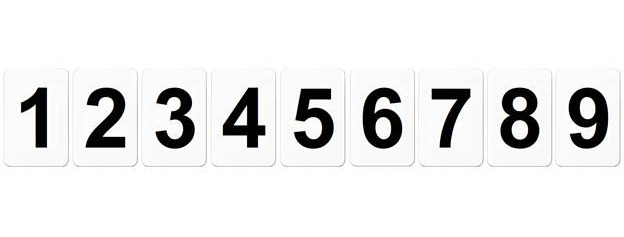
Use this model: “Instead of smoking, I play the guitar perfectly.” It’s very hard to make a mistake with this.
The world where you live without your hated habit already exists, along with other worlds. Neopsychotechnology will guide you to the right world like Ariadne’s thread.
And don’t mention your body weight in your phrases, because muscle weighs more than fat. You can become slimmer while gaining muscle mass. Don’t get creative if you don’t know much about anatomy, physiology, or nutrition. Stop blaming the scale for weight increases. Just focus on building muscle instead of fat. Your weight may rise, but you’ll lose fat and your body will become leaner.
Why shouldn’t the prayer beads be too long? Why is wood better?
For the same reason you shouldn’t exercise for more than a minute: the prayer beads shouldn’t bore or annoy you. One round shouldn’t cause boredom or finger fatigue. Your fingers get tired the first time? The prayer beads annoy your subconscious right away? Then it will just lie in your bag or on your nightstand-especially if your fingers hurt later. So, for the first week, don’t do more than one round. And only a couple of times a day: in the morning when you wake, and in the evening before bed. A minute or two is enough. Therefore, the circle shouldn’t have 108 beads: that’s a surefire way to annoy the child in your head.
Wooden rosaries don’t make as much noise as stone ones. And wooden beads aren’t so cold to handle outdoors in winter. You’ll soon be carrying them with you. A normal prayer beads is shown in the photo at the very beginning of Chapter 2.
The smartphone app uses simple games instead of prayer beads and limits game time.
Chapter 3. What should you prepare for after starting the procedures?
The subconscious punishes disobedience. You have re-persuaded it about what is good and what is bad — now it expects you to behave accordingly. It also works when you understand you’re wrong and doing harm. According to natural law, evil should not win, otherwise life in the Universe will perish. That’s why Nazis, fascists, scoundrels, and other adherents of destructiveness cannot win in principle: their subconscious will interfere, always lowering their capabilities below those of people who disagree with them. They will always be weaker, dumber, and less steadfast than the forces of good. They can win a battle, but not a war.
— Tell me, American, what is power? I think power lies in the truth. Whoever is right is stronger.
Therefore, when you ignore the command to stop, you start feeling unwell and becoming unlucky. In the case of overeating, it works like this:
1. Out of habit, you’ve piled up a mountain of treats.
2. When your brain calculates that you’ve had enough, your subconscious says: stop.
3. But it’s unusual for you. You’ve always eaten more before working with your subconscious. And you want to. It’s tasty.
4. You need to make a choice. Stop.
This is how you train your luck. Not random luck like winning the lottery, but the luck of making the right decisions.
Esoterics call it karma, but in fact you punish yourself for weakness and meanness. You’re punished by the little child you once were. This child can’t be bribed or fooled with excuses, and understands good and evil at a pre-conceptual level.
This child knows you better than anyone, and will find plenty of worthy ways to punish you. Don’t be surprised; listen to the warnings. You have half a plate left and feel the command “enough”? Stop eating. You feel that this time you can do without a cigarette — there’s no nicotine withdrawal yet — and you can either smoke out of boredom or choose not to smoke — you know the right decision. It’s better to play with the prayer beads or tap in the app.
When you listen to your subconscious, it feels good. You will feel it.
Basics
Chapter 4. Getting started
What will we do?
1. Work with the prayer beads in the morning and in the evening before bedtime for about one to two minutes. Or only in the evening before bedtime. Or play in the app according to your schedule.
2. Morning exercises — 1 minute. Once you get used to them in the morning, you can spend a minute on them at work every hour.
3. Children’s meditation before bedtime — 5 minutes. The app will even tell you what to do and show it visually. Enter, switch, exit. Or stay. You’ll wake up in the right place in the morning anyway. Information about where you enter and what you switch is in the “Basics” section.
Working with rosaries
Rules:
1. Come up with a competent phrase. By default, use: “Instead of overeating (smoking, kleptomania, alcoholism, your problem) I write brilliant novels (study higher mathematics, run a successful business, beautifully paint plates, your solution).”
2. Say the phrase silently. Not out loud and without moving your lips.
3. After saying your phrase to yourself once, move one bead. Handle the beads however you like and ignore any religious advice.
4. You shouldn’t get bored or have tired fingers on the first try. You don’t even have to complete a full circle.
5. For the first few weeks, keep the prayer beads on the bedside table. Before sleep, you can use it for meditation. In the morning, you can repeat your mantra while lying in bed. If you need the bathroom, take the prayer beads and use it while sitting on the toilet. The same applies to the app.
By the way, the bathroom and toilet enhance the effect. I don’t know about the shower.
Бесплатный фрагмент закончился.
Купите книгу, чтобы продолжить чтение.