
Бесплатный фрагмент - One card between us
Lenormand insights on love and relationships
Introduction
In the daily work of a Lenormand practitioner, the cards often become an essential tool — especially when a quick, clear answer is needed for a difficult question asked by a friend or a walk-in client. Yet it’s not always possible to lay out a large spread or perform a deep analysis. This is particularly true in relationship readings, where heightened emotions can easily distort perception. For that reason, it’s important to have simple and effective methods that provide clarity without requiring much time. In this book, I offer a straightforward, ready-to-use approach that saves time without reducing the accuracy or quality of the interpretation.
There are many spreads suitable for analysing relationships, but here I present a method that is both simple and highly effective. If you don’t need an in-depth, multi-layered reading and only want a clear sense of what is happening between two people — for instance, a man and a woman — then three cards are all you need: two significators and a single card placed between them. This central card reveals the emotional atmosphere and the true state of the connection, showing how the partners relate to one another and what they feel. This streamlined technique makes it possible to obtain meaningful answers quickly, which is especially valuable when time is limited.
It’s also worth noting that the interpretations in this book are not limited to this simple three-card method. You can apply them to any relationship spread, including the Lenormand Grand Tableau. In the Grand Tableau, this information is particularly relevant when the Man and Woman cards appear on the same horizontal line with exactly one card between them. Such placements are relatively rare, because in real life not every partnership is experienced by both people as equally close or mutually significant. Therefore, if you encounter this combination, be sure to examine it closely — even if the querent’s original question was not specifically about love or relationships.
A Simple Relationship Spread
This is a very simple spread, yet it works reliably and provides clear answers quickly. Start by placing two significator cards — No. 28 and No. 29 — face up on the table. They do not participate in the spread itself, but they are essential for directing and focusing your attention. Experience shows that using significators produces more accurate results than drawing a single card while merely imagining the people involved. For this reason, I recommend always laying out both significators. In this spread, the Man card represents the male partner, and the Woman card represents the female partner.
Next, formulate your question clearly, set aside unnecessary thoughts, and focus on the act of shuffling the deck. After shuffling, make a clean, even cut, place the upper part of the deck underneath, and draw the top card from the newly assembled deck. Place this card in the center, between the two significators (Fig. 1).
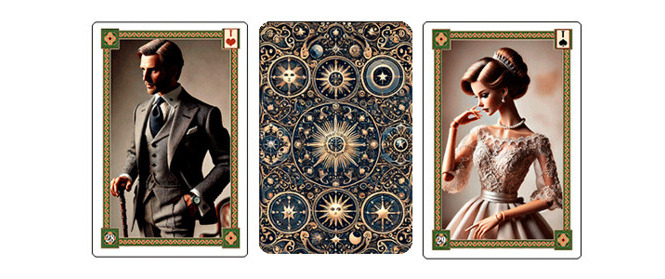
This card is your answer. This simple method allows you to gain a clear and immediate understanding of the current dynamics between the two partners. It is important to remember that every interpretation must be adjusted to the specific situation at hand. The partners may be long-married spouses or people who have known each other for only a few days — and this naturally influences how the card meanings should be understood. Age, background, and life experience can also shape the way individuals perceive one another and their relationship. For that reason, the interpretations that follow should be seen as a foundation rather than fixed rules. Your task is to adapt them to the real context and the unique dynamics of the couple you are reading for. This approach will help you reach a deeper understanding of the situation and provide more accurate insights. With that in mind, let us move on to the card meanings.
Rider
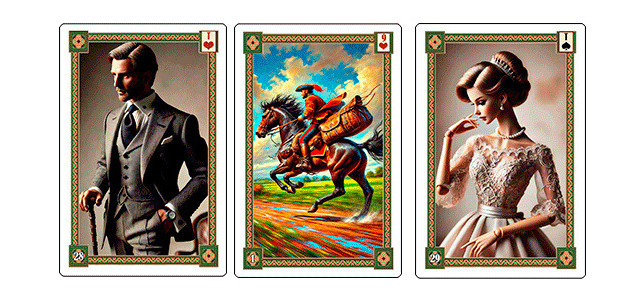
When the Rider appears between the Man and Woman cards, it brings the entire combination to life. It shows that a strong current of energy is flowing between the partners — communication, interest, attraction, the desire to be close, and the need to stay in contact. These relationships feel as if they are taking off: events move quickly, emotions are vivid, and each day brings something new. This is a dynamic, lively connection shaped by movement and an active exchange of energy. Here the partners are constantly interacting — messages, calls, meetings, glances, meaningful words. They can’t seem to get enough of each other: texting late into the night, looking for excuses to meet, sharing ideas, dreams, and plans. Even a brief encounter matters. It fuels the emotions and keeps the spark burning.
The Rider also represents initiative. Often one partner becomes especially proactive — writing first, suggesting a meeting, creating opportunities to spend time together. The relationship gains a sense of playfulness, lightness, and flirtation, which makes the connection feel vibrant and engaging.
This is a “here and now” type of relationship. The partners live in the present: today a walk, tomorrow a spontaneous outing, the next day a discussion of shared ideas. The bond is full of impulse, movement, fresh emotions, and romantic novelty. Sometimes the closeness develops so naturally that it feels as if they have known each other much longer.
But the Rider also has another side. Its energy is not about stillness or long-term stability — it is the energy of movement, change, and impulse. So when the Rider stands between the Man and Woman, the message is not always about reliability. It is more often about beginnings, sparks, inspiration. The card frequently indicates a phase of infatuation: strong attraction and romance, emotional highs — but not yet depth or steadiness.
This kind of bond can be compared to a fire that burns brightly but needs tending. If the partners want this spark to last, they cannot allow the relationship to burn out through intensity alone. The card advises channeling this passionate energy into something deeper: trust, emotional closeness, understanding. If they can maintain the momentum while giving it direction, the relationship can become truly strong. In this case, the Rider transforms from a fleeting visitor into a source of ongoing inspiration that keeps the connection fresh and alive even years later.
Overall, when the Rider appears between the Man and Woman cards, it marks a vivid, energetic, and inspiring stage of the relationship — a time when everything is in motion, the heart beats faster, and both partners feel the urge to act. Yet the card also offers a reminder: for this impulse to last, it needs direction and meaning. Movement should grow into a shared path, and early infatuation should gradually develop into real partnership.In this position, the Rider indicates that the relationship is in a dynamic, unfolding phase. The atmosphere between the partners is lively and full of momentum, as if everything is just beginning. With each passing day, their attraction and interest grow stronger. This is a period rich in activity — meetings, calls, messages, and the first steps toward shared plans.
Keywords
Positive Meanings
• constant communication
• frequent calls and messaging
• spontaneous meetings
• making plans together
• desire to be close
• efforts to grow closer
• light, playful communication
• brightness and inspiration
• a feeling of uplift
• strong attraction
• mutual interest and fascination
• passion and enthusiasm
• the sense of a fresh beginning
Negative Meanings
• instability
• fleeting or superficial connection
• lack of foundation
• temporary impulse
• risk of losing depth
Advice
• transform the dynamic energy into stability
• cultivate trust and understanding
• strengthen the foundation of the relationship
• move toward intentional, conscious closeness
Clover
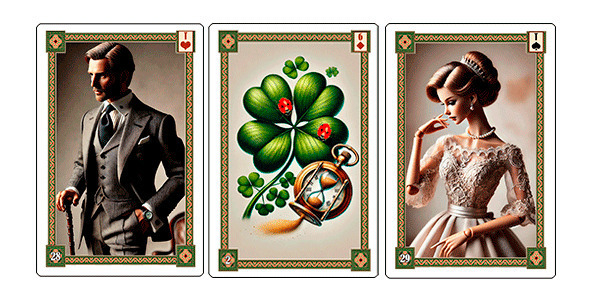
In a relationship, the Clover represents lightness, joy, and the feeling of a fresh breeze that breathes new life into the connection. Its energy is like a sunny day after the rain — the air is clean, the sky is clear, and everything around seems to wake up again. Between the partners there is warmth, ease, and natural comfort. They feel free with each other, without trying to impress — it simply feels good to be together.
Clover brings into the relationship the rare kind of simplicity where happiness is born from small things: shared laughter over a random remark, a leisurely walk with no destination, a small surprise, or a private joke only they understand. These moments create a special atmosphere of closeness and joy, where no one needs to be perfect — being yourself is enough. This connection feels like a breath of fresh air: it eases tension, soothes the spirit, and reminds us that love doesn’t need to be dramatic to be genuine. Clover marks a moment of happiness when everything flows easily and naturally. Relationships under its influence are full of spontaneity and playfulness. Partners may suddenly decide to take a trip, plan a mid-week picnic, or simply laugh together for no reason. It’s a union where emotions are not restrained but expressed freely.
Yet Lenormand encourages us to look deeper.
Clover’s energy is naturally fleeting: it brings a spark of joy but does not always promise duration. When this card appears between the Man and Woman, it often suggests a light, carefree romance that may not be built to last. It can describe a short but very warm stage of the relationship — like a sunny morning that eventually gives way to another part of the day. Such connections are often remembered for their unexpected arrival, their ability to brighten life, and their gentle fading, leaving behind warm memories. Still, Clover carries a deeper wisdom. It can signify not only a transient feeling but also the couple’s ability to preserve lightness even in difficult moments. This is mature ease — not superficiality, but the wisdom of choosing joy over blame, a smile over conflict. Such energy helps heal and renew the relationship. Sometimes the Clover appears to show that the partners can navigate challenges through humor, kindness, and acceptance, without turning their difficulties into drama.
The Clover card serves as a gentle reminder from the Lenormand deck: happiness is not always found in grand gestures. It often lives in the small, easily overlooked moments — a morning cup of coffee, a warm glance, shared laughter, or a brief message that simply says, “I’m thinking of you.” When appreciated, these tiny expressions of affection can gradually grow into something much deeper. When the Clover appears between the Man and Woman cards, its message is clear: “Value the present moment. Enjoy what is simple. Don’t demand — appreciate. Even something fleeting can turn into something extraordinary.”
This card encourages us to notice the light in everyday life and to remember that true happiness is measured not by duration, but by the quality of the moment. If the couple can preserve this sense of ease without diminishing its importance, it becomes a warm ray of sunlight — one that can continue to warm their hearts for years to come.
Keywords
Positive Meanings
• lightness and easy flow
• joy and warmth
• spontaneous happiness
• playful, carefree communication
• pleasant surprises
• shared laughter and inside jokes
• natural ease and comfort
• refreshing emotional energy
• optimism and bright moments
• a fresh start or renewal
• growing interest
• the ability to enjoy the present moment
Negative Meanings
• fleeting, short-lived phase
• lack of seriousness or depth
• instability due to lightness
• temporary romance
• relationship without a strong foundation
• risk of emotional “fade-out”
Advice
• enjoy the moment, but stay mindful of what you want long-term
• gently guide the relationship toward more depth and consistency
• turn spontaneity into shared experiences that strengthen the bond
• choose warmth, humor, and lightness to resolve tensions
• appreciate the joy, but don’t rely on it alone — build something lasting
Ship
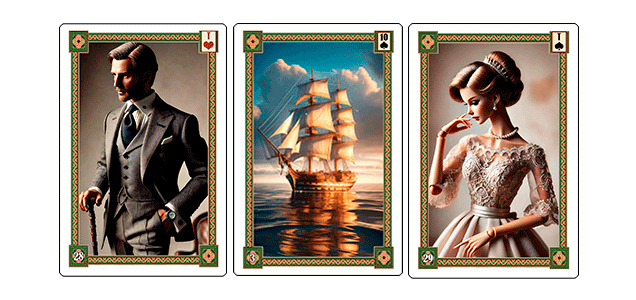
When the Ship appears between the Man and Woman cards, the relationship becomes infused with themes of distance, longing, and movement toward one another. This is the card of a journey — both external and internal. It often suggests that some form of distance exists between the partners: physical (different cities, countries, time zones, or even separate rooms, as when spouses sleep apart) or emotional (the partners are together, yet one feels “far away,” preoccupied with their own thoughts, goals, or circumstances). The Ship speaks of a bond in motion — a love being tested by time and space. An invisible thread stretches between the two, connecting their hearts across miles, borders, and periods of separation. They remain close in thought even when they are far apart physically. In such relationships, the atmosphere is one of anticipation and longing; every call, every message becomes precious, and each meeting feels like a long-awaited celebration.
The Ship embodies the romance of the journey. Its energy resembles a sea voyage: sometimes wind fills the sails, sometimes there is stillness — but there is always movement forward. The partners may be separated by circumstances, yet their connection stays alive through their inner longing to reunite. This card often shows a love being tested for its resilience — the ability to wait, to trust, and to keep warmth alive despite distance and time.
Sometimes the Ship indicates constant travel or frequent work trips for one of the partners — someone who lives “out of a suitcase,” moving between jobs, shifts, or locations. This can fragment the connection and require patience and conscious effort to maintain. Yet relationships shaped by such distance often contain a striking sincerity and depth — deeper, at times, than partnerships where people are always physically together. Distance sharpens perception: it teaches us to value what everyday closeness can make ordinary.
The Ship can also point to a new stage in the relationship.
At times, it speaks of an upcoming move, a change of country, or a decision to join lives and begin anew elsewhere. In this sense, the Ship symbolizes movement toward a shared future — a willingness to leave the familiar shore and set sail into the unknown together. Such a step requires maturity, courage, and trust, for no one knows what lies beyond the horizon. Yet it is often these very decisions that keep the relationship alive and evolving.
There is also a sensual and emotional layer to the Ship card. It can point to a kind of inward withdrawal, when one partner retreats into their own inner world — into thoughts, memories, dreams. Sometimes the distance is not physical at all, but emotional: a person is physically present, yet feels far away, absorbed in something within themselves. In such cases, the Ship suggests the need to restore connection and rekindle emotional closeness, while still respecting each partner’s personal space. However, experience shows that the Ship more often speaks of physical distance, while emotional isolation is more accurately represented by the Tower card.
At its core, the Ship is about the journey toward closeness through challenges. This is a relationship that needs time — just as a ship needs the sea and the wind to reach the harbor. While the movement continues, it is important to maintain faith, patience, and inner stability. The connection is still in transit, and the true meeting lies ahead. The Ship is the card of love at a distance, of love as a journey, where not only feelings matter, but also the willingness to overcome obstacles. It speaks of those who know how to wait, and who understand that distance is not a barrier but a test. When such relationships endure their trials, they often become genuinely mature and profoundly deep.
Ultimately, the Ship is a metaphor for the path toward unity. It says: “The bond exists, the feelings are alive — but the shore is still ahead.” And if the partners keep their course and do not lose each other in the vast sea of circumstances, their story will eventually reach its quiet, steady harbor — the place where waiting ends, because they are finally together.
Keywords
Positive Meanings
• love at a distance
• movement toward one another
• anticipation, longing, romantic expectation
• emotional depth that grows over time
• strong inner connection despite physical separation
• meaningful reunions
• relationship development through experience
• willingness to overcome obstacles
• readiness for change or a new stage
• shared plans for the future
• travel, relocation, or moving in together
• emotional maturity and patience
Negative Meanings
• physical distance separating the partners
• delays, slow progress
• longing without fulfillment
• relationship “in transit” with no clear arrival
• emotional withdrawal (less common — more Tower’s domain)
• fragmented communication
• one partner is often away (travel, work, obligations)
• uncertainty about the future
• feeling that the relationship is “on hold”
Advice
• stay patient — the connection is still unfolding
• maintain communication to bridge the distance
• give each other reassurance and emotional warmth
• transform longing into meaningful action
• prepare for a new stage or important decision
• keep your direction steady — the “harbor” lies ahead
• trust the process and allow the relationship to mature
House
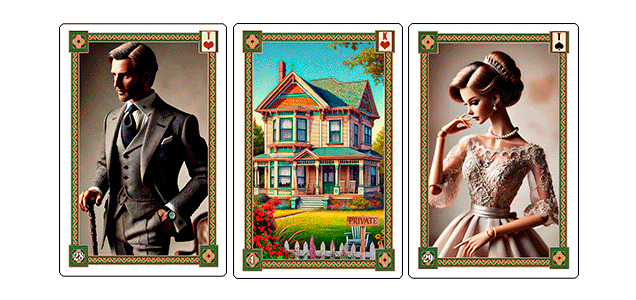
The House represents everything that gives a person a sense of roots, stability, and inner peace. It speaks of reliability, protection, and the gentle warmth that arises where one is accepted without conditions. When the House appears between the Man and Woman cards, it is one of the strongest indicators of a mature and serious bond. Here, the partners see in each other not just a source of emotion or inspiration, but someone with whom life can truly be built. Their connection rests on trust, loyalty, and shared responsibility.
The atmosphere in such a relationship is calm and steady. There are no dramatic highs or turbulent lows — instead, there is something far more valuable: stability, security, and confidence in the future.
With each other, the partners feel “at home” — safe, comfortable, and completely themselves. There is no need to perform, impress, or fit into someone else’s expectations. In this union, one can relax, take off the mask, and simply be, knowing they will be understood and supported. The House often describes an established family or a long-term partnership that has already moved through different stages. These are people who not only love each other, but live together — building a home, making plans, creating comfort, establishing rituals and traditions. It is a card of roots and shared space in which the sense of “we” naturally grows.
If the relationship is still in its early stages, the House shows that the partners are moving toward something serious. This may manifest as conversations about living together, household arrangements, dividing responsibilities, or meeting each other’s families. These are the first bricks of a future foundation. In everyday readings, the House points to reliable marriages, long-term bonds, and relationships strengthened by time.
Here, love is expressed less through words and more through steady actions: care, attentiveness, consistency, loyalty. This is a partnership that values constancy — a union where the partners remain close not only in moments of joy, but in ordinary daily life.
Yet the House has its shadow side.
Sometimes it speaks of stability that has become too rigid — a comfort zone turning into routine. When everything becomes overly predictable and “by the rules,” passion can fade. People may stay together for the sake of family, children, or the familiar way of life, while genuine emotion drifts quietly into the background. In such cases, the House becomes more of a fortress than a source of inspiration: the walls are strong, but the hearth no longer burns with warmth.
Nevertheless, the House card always carries the idea of foundation and maturity. It is not a chance encounter or a fleeting romance — it is a space of trust built step by step, where every “brick” is a choice to stay, to understand, to support. A true House in relationships is not only a shared address, but an inner feeling of safety and belonging. And if it grows cold, the warmth can be rekindled through attention, gratitude, and small gestures of love. When that happens, the walls fill with living breath once again, and the hearth is reignited — not out of habit, but from a genuine desire to be close.
Keywords
Positive Meanings
• stability and security
• trust and mutual support
• emotional safety
• long-term commitment
• shared home, shared life
• loyalty and reliability
• building a future together
• strong foundation
• a relationship that feels “like home”
• harmony in everyday life
• family, traditions, established routines
• deep sense of belonging
Negative Meanings
• routine, stagnation
• emotional cooling
• overly predictable dynamics
• duty replacing passion
• staying together out of habit or obligation
• relationship becoming “just a household”
• lack of novelty or spontaneity
• emotional walls instead of warmth
Advice
• strengthen the foundation through daily care and consistency
• bring warmth back through small gestures of love
• break routine with new experiences or shared activities
• appreciate the partner’s reliability rather than taking it for granted
• balance stability with emotional openness
• rebuild closeness through gratitude, attention, and honest presence
Tree
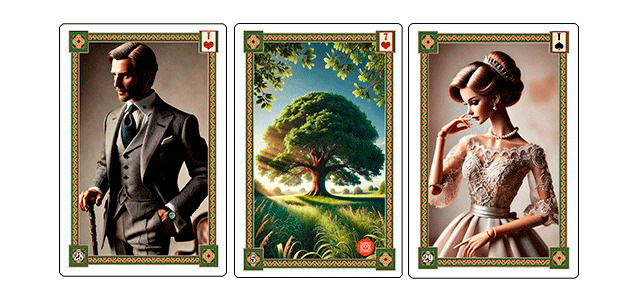
The Tree symbolizes strength, reliability, and the natural, organic growth of feelings. It is not a flash of passion nor a storm of emotions, but a quiet, deep connection that develops slowly and steadily — like a living tree sending its roots deeper with each passing year. When the Tree appears between the Man and Woman cards, it points to a partnership grounded in inner maturity and a strong sense of stability. In this kind of relationship, the essence of the connection matters more than its outward display — its solidity, its health, and its ability to withstand life’s challenges. The atmosphere here is calm, steady, and measured. The partners do not rush or disrupt the natural flow of events; they grow together, maturing emotionally and spiritually.
The Tree often indicates long-term, established relationships defined by trust, respect, and a feeling of reliable support. This is when a partner becomes not only a loved one but a part of your inner world. Such a bond may not look dramatic on the surface, but it is profound and deeply rooted — like a hidden root system that holds an entire life structure in place. In real readings, the Tree frequently describes couples who have been together for many years — spouses who are hard to imagine apart, because they have gone through so much together: joys and illnesses, difficulties and triumphs. This is a connection sustained not just emotionally, but physically and spiritually as well. Sometimes the Tree literally points to caring for health — shared meals, walks, rest, healing — anything that strengthens both the body and the relationship.
The Tree carries the energy of natural development and inner balance. There is no urge to rush; everything unfolds at its own pace. Such relationships do not require constant declarations or dramatic gestures. Presence, attentiveness, and quiet kindness are enough. It is love without fuss, without theatrics, without performance. It simply exists — like breathing, like life itself.
But the Tree also has a shadow side. At times it indicates stagnation, when the relationship becomes too calm, lacking movement or fresh impressions. Everything is stable, yet suspended in time. The partners are together, but there is little growth: the feelings haven’t faded, but they no longer evolve. This kind of bond can resemble an old tree that still stands firmly but has stopped reaching upward. In such cases, the Tree gently reminds us that all living things need renewal. Even the strongest roots require fresh water — attention, inspiration, change. If the relationship feels too habitual, it may be time to bring something alive into it: a shared goal, a trip, an honest conversation, or simply a new way of seeing each other.
Nevertheless, the central message of the Tree is the power of time, endurance, and depth. It describes relationships that do not collapse after the first argument and do not disappear when tested. This is a union that survives cold seasons and droughts because within it flows sap — the life force that nourishes and unites two people. The Tree speaks of a love that lives not by moments but by years; not by words but by actions; not by flashes of passion but by the roots of trust and acceptance. It teaches that true closeness is not constant activity, but quiet presence — the steady feeling that you are “home,” and that this home grows with you.
Keywords
Positive Meanings
• long-term relationship
• emotional and spiritual maturity
• stable, steady growth
• deep-rooted connection
• trust and mutual support
• healing, balance, and harmony
• shared life experience
• patience and endurance
• strong foundation for the future
• caring for each other’s well-being
• steady emotional presence
• connection that grows stronger with time
Negative Meanings
• stagnation or lack of movement
• relationships “stuck” in routine
• slow development that tests patience
• feelings that have stopped growing
• too much calm, not enough passion
• emotional monotony
• habitual connection lacking inspiration
• reluctance to change
Advice
• nurture the relationship with attention and small acts of care
• bring fresh energy through new experiences or shared goals
• appreciate long-term stability rather than expecting constant excitement
• strengthen emotional and physical well-being together
• allow the relationship to grow at its natural pace
• balance calmness with moments of renewal and intentional closeness
Clouds
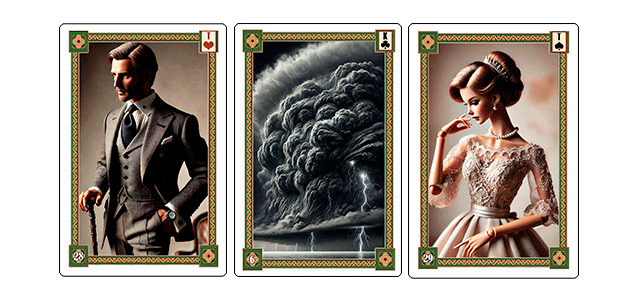
The Clouds card in relationships brings an atmosphere of uncertainty, emotional tension, and inner confusion. It represents a temporary dimming of clarity: feelings exist, but nothing is clearly defined. Everything seems wrapped in fog — the horizon disappears, direction is lost, and familiar emotional landmarks no longer feel reliable.
When the Clouds appear between the Man and Woman cards, they signal a period of instability: closeness alternates with distance, warmth with coldness. Partners may care deeply for each other, yet something subtle interferes with trust — a sense of ambiguity, doubt, or emotional turbulence.
Often this isn’t triggered by external events but by one’s own inner state: a person may simply not understand what they want or where the relationship is heading. Clouds symbolize changeability. One day brings warmth and understanding; the next, tension and misunderstandings accumulate. Moods shift like the weather — from sunlight to storm. Such relationships resemble walking through dense mist: the partners continue forward, but cannot see what awaits them. Love is present, but its light keeps flickering — appearing through the clouds and disappearing again.
In practical terms, the Clouds card describes couples experiencing emotional pressure, miscommunication, or hidden fears. One partner may seek clarity — through words, actions, or commitment — while the other avoids the conversation, withdraws, or feels lost in their own emotions. This card can also indicate suspicion or jealousy, where even small events stir strong reactions. Thoughts begin to intrude:
“Why is he suddenly distant?” “Who keeps writing to her?” “Why does he avoid talking to me?”
Even without objective reasons, internal anxiety can create emotional distance. The Clouds often reflect relationship “mood swings”: today closeness and passion, tomorrow silence and coldness. This rhythm slowly drains energy and creates fatigue.
Yet relationships marked by the Clouds are rarely empty. Strong feelings often hide behind the turbulence. This is why people don’t walk away even when things get difficult — they hope for clarity, for the sky to open again. And it is crucial to remember: the influence of the Clouds card is always temporary. Just as real clouds cannot block the sun forever, this card does not point to an endless crisis. It simply shows that emotions are clouding perception right now. When the storm passes, the truth becomes visible — whether this was genuine love or an illusion shaped by fear. If the relationship endures this phase, it usually emerges stronger, clearer, and more honest.
The Clouds card tests the bond, bringing hidden issues to the surface, urging partners to speak openly, rebuild trust, and release old grievances. But if the foundation is already weak, the storm leaves behind only clear skies — without illusions or self-deception.
The Clouds are not an ending, but a trial. They remind us that darkness gathers not to destroy, but to purify. The true source of light is within — in honesty, sincerity, and the willingness to face reality. And when that inner light returns, the clouds disperse, revealing a relationship renewed, grounded, and ready to breathe again.
Keywords
General Meanings
• unpredictability, mood swings
• misunderstanding, secrecy, unspoken feelings
• unclear intentions, mixed signals
• waiting for clarity but receiving evasive answers
• jealousy, suspicion, excessive control
• emotional ups and downs — from closeness to distance
• frequent quarrels, distrust, mutual resentment
• fog, confusion, inner tension
• anxious expectations, doubts, fears
• a sense of unpredictability, emotional instability
• dependence on the partner’s mood
• bursts of passion followed by coldness
• longing for stability and clarity
• a fragile balance between love and fear of loss
• crisis of trust, jealousy, assumptions
• deception, self-deception, distorted perception
• tendency to overthink and search for hidden meanings
• emotional burnout from constant worry
• feeling lonely even within the relationship
• exhaustion from uncertainty
• breakup if the clouds linger too long
Advice
• avoid making decisions while anxious — wait for clarity
• speak openly about your feelings; don’t let things remain unspoken
• learn to distinguish real issues from imagined fears
• don’t try to control your partner — strengthen your own inner stability
• give the relationship time: the fog will lift
• stay centered and don’t get swept away by emotional storms
• remember: the Clouds are temporary; what matters is what remains after they pass
Snake
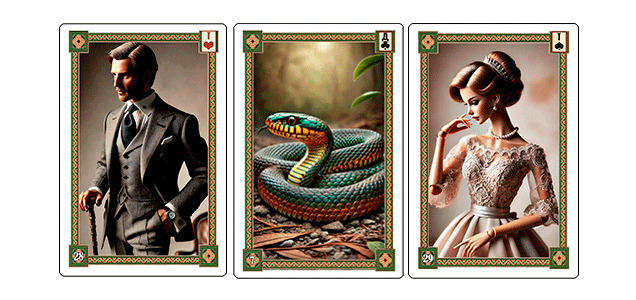
The Snake card in relationships creates an atmosphere of alertness, hidden tension, and inner conflict. It is a complex, multilayered symbol where attraction and fear, desire and doubt, magnetism and danger are tightly intertwined. Such relationships are rarely straightforward — there is almost always a secret, a hidden motive, or something unspoken beneath the surface.
When the Snake appears between the Man and Woman cards, it points to a connection where feelings are intense but not entirely transparent. Beneath outward calm, there may be jealousy, manipulation, or a desire to control. These are relationships in which both partners instinctively sense each other’s power, and therefore remain careful — as if playing a game where showing vulnerability is risky. Between such people there is often a hypnotic pull: a strong passion, acute curiosity, an inability to let go. Yet this passion comes with its own venom — anxiety, suspicion, the fear of deception or betrayal. Partners may reach for each other and sting at the same time, often unconsciously causing pain. At the heart of this lies not only physical attraction, but a deep psychological knot — a struggle for power, attention, and the need for emotional validation.
The Snake can also signal the presence of a third person, usually a woman. This may be a rival, an ex-partner, a friend, or a relative — someone whose influence enters the relationship quietly, through hints, conversations, or emotional pressure. This creates tension and mistrust within the couple, a persistent feeling that “something is wrong,” even if no concrete evidence exists. In practical terms, the Snake manifests as jealousy, suspicion, secrecy, or emotional manipulation. One partner may secretly check the other’s messages, hide information, use silence as punishment, or hold grudges. Sometimes one partner deliberately provokes the other to test their feelings. Over time, this dynamic poisons the relationship, creating an invisible emotional distance. Even when love is present, it becomes heavy and electrified, as if a charged current runs between the two hearts.
Yet the Snake is not only a symbol of deception or temptation. It also represents transformation — like a snake shedding its old skin. This card reveals where love has become entangled with fear, where trust has turned into control, where longing has slipped into dependency. It highlights the most vulnerable points of the relationship — not to destroy it, but to show what needs healing. If both partners are willing to acknowledge what is happening, the venom can become medicine. Honest conversation, revealing hidden emotions, abandoning manipulation, and choosing understanding over fear can fundamentally change the connection. The Snake’s energy can shift from destructive to deeply healing.
These are relationships that lead partners through temptation but make them stronger and more self-aware. They learn to see not only each other’s actions but also their underlying motives — their own and one another’s. In this sense, the Snake is not just a warning; it is an invitation to conscious, honest relating. It asks for inner truthfulness and the courage to face reality without flinching. If the couple is brave enough to walk through the fog of hurt, jealousy, and mistrust, a new depth opens — free of games, masks, and poison. Then the Snake becomes a symbol not of threat, but of awakening, wisdom, and renewal. It marks a path that leads through temptation to inner strength, through suspicion to trust, and through venom to a cleansing, healing truth.
Keywords
Бесплатный фрагмент закончился.
Купите книгу, чтобы продолжить чтение.