

Review
“This book is a carefully curated collection of therapeutic fairy tales for adults — for those who are tired, who have lost their footing, or who feel they have lost themselves. Through imagery, metaphor, and simple practices, it helps the reader hear their inner voice, restore personal boundaries, ease anxiety, and step by step return to their own light and wholeness.
In the bustle of adult life, we often silence our inner voice, ignore our exhaustion, and conceal our anxiety behind a mask of well-being. This collection of therapeutic tales has been created especially for adults who have encountered burnout, anxiety, worry about the future, loneliness and misunderstanding, low self-esteem, and difficulties with self-acceptance.
Each story is a gentle tool for self-help, grounded in psychological principles. Through profound and poignant metaphors and vivid characters, the book invites the reader to explore their feelings with care, to rediscover inner sources of support, and to view life’s challenges from a new, healing perspective.
Reading this book is an act of self-care — a chance to pause, to step out of the noise, and to give your soul what it truly needs.”
Mrs. Tatiana Sorokolat (Tiana Soulou) owner of AyTekin Publishing House.
“This is a collection of therapeutic fairy tales for adults that takes a refreshingly unconventional approach to self-help. The author taps into the timeless power of storytelling to create a safe emotional space that allows the reader to bypass the mind’s defenses and dive into a process of self-reflection. Moreover, Naale’s central insight, that the soul responds to metaphor rather than logic, is a clever framing device. The result is a book that feels less like a manual and more like a quiet, wise conversation with a trusted friend.
The book’s primary added value lies in its practical structure, which transforms passive reading into active self-work. The combination of guiding questions, writing exercises, and mantras at the end of each story turns the book into a personal workshop that accompanies the reader step-by-step. With her compassionate and gentle tone, the author offers something rare: permission to feel, told through the language the heart already speaks.”
Mrs. Lee Kushnir Hurwitz (M.A Research Student, East Asian Studies; B.A. Business Administration & East Asian Studies).
Foreword
My dear Reader,
If this book has found its way into your hands, it means that somewhere within you lives a brave traveler — someone who, despite fatigue, heaviness, or doubt, continues to search for the road home. To yourself.
Perhaps you have already tried many things. You have read wise books, tried to “pull yourself together,” made promises to yourself… And yet the most important changes seem so difficult to achieve. Do you know the secret? The mind loves logic, but the soul speaks the language of images, parables, and metaphor. It does not respond to dry instructions. But it blossoms when addressed through story.
What you hold is not merely a collection of texts. It is a collection of keys. Each tale in this book is a special metaphorical tool. Why is it needed?
To Gently Bypass the Mind’s Defenses
The psyche is wise: it hides the most painful experiences deep beneath layers of criticism and rationalization. A direct question — “What is your problem?” — often brings only paralysis or resistance. But if we ask, “What does your state resemble? A locked garden? A storming sea?” — the soul responds at once.
Metaphor allows you to touch your pain, fear, or resentment safely, without naming them outright. It is like examining a wound through a magnifying glass — less frightening, and far clearer how it may be healed.
To See the Situation from Above
When we are inside a problem, we are like an ant in a labyrinth. We see only the wall before us. A fairy tale lifts us above that maze, to a bird’s-eye view. Suddenly we notice — there is a turn here, a hidden passage there.
A story about the Blacksmith who feared imperfection, or the Wanderer trapped in memories, helps us recognize our own patterns and discover new solutions that once seemed invisible.
To Anchor Change at a Deeper Level
When you do not merely force yourself to be confident, but live through the story of how to kindle your own “Sleeping Fire,” it becomes part of your personal experience. You do not receive advice. You receive an experience. And what is truly lived through is never forgotten.
How to Work with This Book So It Truly Helps
This is your personal space for exploration — warm, safe, and free of judgment.
Find 15–20 minutes of quiet where no one will disturb you. Take your favorite notebook and a pen. Let it become your traveler’s journal.
Read the tale aloud. Yes, aloud. Spoken words carry a special power; they create immersion. If you respond better to sound, find a cozy corner and listen to the audio version. Allow the story to envelop you.
Ask yourself the first, simplest questions:
— What feelings arose in me?
— Do I recognize myself in one of the characters?
— Which moment touched me most deeply? Why?
Do not analyze. Simply allow the answers to come. Write them down.
Choose a technique to work with. After each tale you will find clear, step-by-step instructions designed so that you can work independently, without a therapist. Begin with 10–15 minutes a day. Do not try to embrace everything at once. Small but regular steps lead to profound change.
Be sure to conclude your practice with the question: “What do I feel now? What has shifted in my state?” This simple reflection anchors your new experience and reveals your own path to you.
This book is your personal guide. It will not give ready-made answers, because the truest answers already sleep in the depths of your heart. But it will gently lead you toward them.
You are not alone on this journey. The author of every line in this book is that same brave traveler who once searched for her own keys. And now, as I pass them on to you, I know with certainty: your garden will bloom. It needs only time, care, and the living water of kind and healing stories.
With faith in you,
The Author — who once lost, and found again, her way Home.
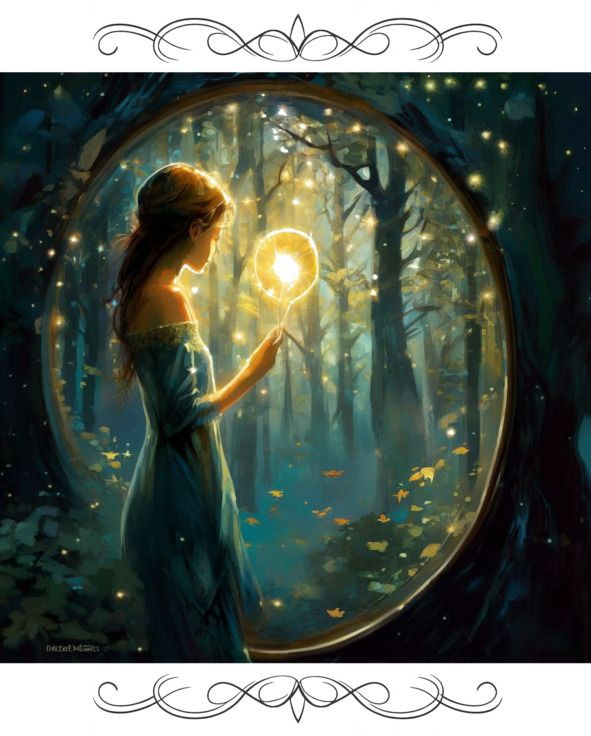
The Girl and the Mirror of Light
In a beautiful village at the edge of an ancient forest lived a girl named Lina. She was kind — truly kind. Not the kind that shows off, but the kind that glows quietly from within, deep in the heart. Lina often watched others: someone singing so beautifully it took her breath away, someone dancing as if born for it, others building houses, writing books, creating something important… And each time, her chest tightened with the thought: “I can’t do that. I’ll never be that good.” Her heart ached, and the dreams that had once burned brightly now gathered dust in a far corner of her soul. She wanted to create, to love, to shine — but a small voice inside whispered: “You’re not worthy. There are better people than you. Don’t try, or you’ll only embarrass yourself.”
One day, Lina wandered through the forest, weighed down by her familiar sadness. “Everything passes me by,” she thought, stepping over roots and dry branches. Suddenly, something struck her leg with a jolt, almost making her stumble. Bent over in confusion, she saw an old tree root jutting from the ground — and beneath it… a mirror. Covered in moss, worn by time, yet surprisingly intact. She wiped the dusty surface with her fingers and froze. She had never seen anything like it. This was no ordinary mirror. It did not merely reflect appearances — it reflected thoughts.
Lina gazed at her face, but in the mirror it appeared dim, and before it floated a clumpy gray mist. She heard what seemed to be her own voice: “You can’t do anything. You are completely useless.” Lina recoiled in fear and was about to throw the mirror away when, from the heart of the oak beside her, another voice emerged — soft and warm: “Don’t rush. Look again, more closely. These are only thoughts, not truth.”
Lina was puzzled. “But I know I’m a failure.” The warm voice replied: “Say the thoughts out loud and notice what they do to you.”
With a heavy sigh, Lina whispered: “I will never accomplish anything worthwhile. Everyone around me creates something far better. I’m terrified because I’ll fail, even if I try.”
Her hands trembled with hurt, the mirror felt heavy, her shoulders slumped, and she felt her body shrinking inward — just as always, whenever the cruel voice inside her tried to destroy her faith in herself. The mist in the mirror swirled. “Ask yourself,” said the voice, “is this really true? Do you have proof?”
Lina frowned. “Well, I haven’t tried, so I don’t know if I’ll fail. But it’s so scary that my hands shake.”
“And what if it doesn’t work the first time?” asked the voice.
“I’ll embarrass myself in front of the whole world! It will be so shameful!” cried Lina in despair.
“And tell me, if someone else fails or makes a mistake, what will you do? Will you laugh?”
“Of course not! I’ll comfort them and support them,” Lina admitted, sensing the contradiction.
“Exactly,” whispered the voice. “You are harsh with yourself, yet supportive to others. Why are you so cruel to yourself? Who told you you couldn’t succeed?”
Lina thought for a moment. “My mother once said I was clumsy, and then at school the teachers scolded me for every mistake. Now I’m afraid to start anything, wondering if they were right.”
The oak remained silent. Tears welled in Lina’s eyes. Then the old tree creaked, extending its branches toward her: “Please, don’t cry, dear one. Everyone can make mistakes — that is what we call experience. And if you keep trying, time and again… you will get better. Your mother and your teachers never meant to hurt you. They simply didn’t know another way. It happens. Many don’t know how to love, care, or nurture. Yes, it hurts. But you have grown into a wonderful person — kind, sensitive, even vulnerable, and that is not a flaw.”
The oak paused, catching its breath. “Now imagine for a moment that the burden of the past has lifted from your shoulders. What would you say to your daughter if she thought about herself the way you do now?”
“Oh, I’d tell her she can do whatever she loves, that it’s okay to make mistakes, and that I am here to guide her, support her, and show her the right path!”
“And what if you said the same to yourself?” the voice asked. Finally, Lina smiled shyly.
“You clever girl! You already see the first rays of light,” the voice said warmly. “Write it here in the sand, so you can see with your own eyes what may be true.”
Lina took a twig and wrote: “I can try and see what happens. I have skills, and I can do things. Everyone makes mistakes, and that’s okay.”
Somewhere inside the oak, an invisible presence sighed with relief and fell silent. The mist in the mirror began to dissipate, and Lina saw her face — not perfect, but alive, with sparks in her eyes. She felt warmth in her chest.
“Now take a step,” the voice said suddenly, “even the smallest one. What have you longed to do but were afraid to try?”
Lina remembered her dream of painting a picture. “But I’m not an artist,” she protested. The voice gently said: “You don’t need to be an artist. Just take the paints and try — for yourself.”
Back home, Lina opened an old sketchbook. Her hands trembled, but she overcame her fear. Picking up a brush, she painted a flower — uneven, but with vivid, almost living petals. The critic’s voice whispered: “This is nonsense.” Lina replied to herself: “So what? I made it myself. I did it.” For the first time in a long while, she smiled. The next day, she added grass, then the sky. With each brushstroke, her shoulders straightened, and the critic’s voice grew quieter.
Weeks later, Lina’s sketchbook was full of paintings. She showed them to a friend from school, who gasped: “This is beautiful! You must keep going!” Lina still doubted herself, but slowly, confidence began to grow in her heart: doubts are not her — they are thoughts to be tested. She began sharing her artwork, learning new techniques, and her heart sang. The mirror she kept now reflected light, her own unique light.
One day, Lina returned to the oak to thank the power dwelling within it. She looked into the mirror, which had never left her side since that day, and saw a woman — not perfect, but alive, brave, and creative.
“You’ve always been like this,” the voice said warmly, “you just forgot. Now go and shine.”
Lina held the mirror close to her heart and walked home, each step strengthening her certainty: her journey was not a race for perfection, but a dance with herself, full of love and discovery.
Working with the Tale
Meeting the Mist
In a beautiful village at the edge of an old forest lived a girl named Lina. She was truly kind. Yet inside her lived a voice whispering: “You’re not worthy. There are better people than you. Don’t try, or you’ll embarrass yourself.” Her dreams gathered dust in a far corner of her soul.
Step 1: Identify Your “Mist”
Take a notebook. Answer honestly (for your eyes only):
— What is your inner critic saying right now? Write 1–2 phrases that come to mind when you think of your dream or a difficult task. Examples: “I will fail,” “I’ll embarrass myself,” “It’s pointless.”
— Where in your body do you feel this mist? (Tense shoulders? Aching stomach? Cold hands?) Just note it.
Dialogue with the Oak
Once in the forest, Lina found a magical mirror that revealed thoughts. Her reflection was dim, shrouded in gray mist, and a voice said: “You can’t do anything.” But from the oak came another voice: “These are only thoughts, not truth.”
Step 2: Separate Thoughts from Self (The “Mirror” Technique)
The oak’s voice is your inner wise mentor. Give it space:
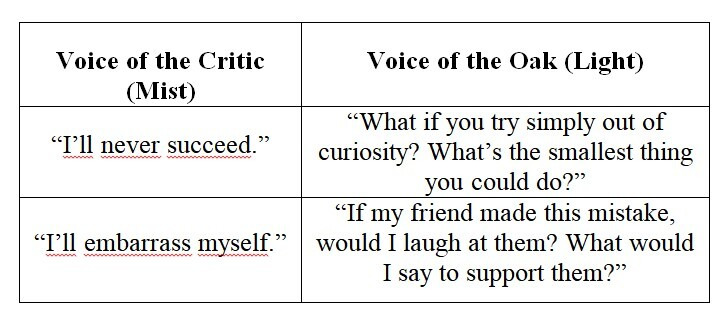
Key question: “Is this really true? Is there any evidence it could be otherwise?”
Lina asked, “What if I’m wrong?”
The Philosophy of Dew and Stones
“I’ll be embarrassed!” she exclaimed.
“And if someone else makes a mistake, will you laugh?” asked the voice.
“No, I’ll support them!” Lina replied, pausing to reflect.
Step 3: Test the Threat (The “What if?” Technique)
Fear loves to exaggerate problems. Let’s put it to the test.
— Formulate the worst-case scenario. Write: “If I try and fail, then…” (example: “…everyone will think I’m a failure”).
— Now be honest: How realistic is this on a scale of 1 to 10? Most often it’s 2–3/10.
— What could go well? Write 1–2 neutral or positive outcomes. (Example: “I’ll gain new experience,” “It might feel awkward for 5 minutes, then it will pass”).
First Small Step
“Take a step, even the smallest one. What have you longed to do but were afraid?” asked the voice. Lina remembered her paints.
“I’m not an artist!” she protested.
“You don’t need to be an artist. Just try — for yourself.”
Step 4: Define Your Tiny Step
Your goal is not to create a masterpiece, but simply to pick up the “brush.”
— What do I want? (Not “be great,” but something simple: draw, write, exercise, socialize).
— What is the tiniest possible step I can take? It must be so small it’s impossible not to do.
— Not “write a book”, but “write one sentence.”
— Not “go to the gym”, but “put on sneakers and stand by the door for one minute.”
— Not “be confident”, but “give myself a tiny compliment in the morning.”
— Write down your tiny step and do it — right now. The focus is not on the outcome, but on the act itself.
Dancing with Yourself
Lina painted a crooked flower. The critic whispered: “Nonsense!” But she replied: “I painted it myself!” She kept going, again and again. With each step, the mist cleared, and her own light grew brighter. Her journey became not a race for perfection, but a dance with herself.
Step 5: Consolidate Success
After each micro-step (even the tiniest one), write in your notebook:
— What did I do today despite the mist? (Did I simply pick up the brush? Write one sentence?)
— What did I feel before and after? (Was I scared at first, and then calmer?)
— What tiny step can I take tomorrow?
Your 5-Minute Daily Plan
You don’t need to memorize all the techniques. Just return to this plan whenever the “mist” thickens.
— Identify the mist (1 min): Write down the critical thought.
— Respond with the oak’s voice (2 min): Ask yourself, “Is this really true? How would I support a friend?”
— Take a micro-step (1 min): Do the smallest possible action toward your value.
— Record in your journal (1 min): Note what you did and what you felt.
Remember: You are Lina, her mirror, and the wise oak all at once. You are the sky — boundless, clear, and eternal. Your thoughts, feelings, and anxieties are just the weather (clouds, rain, storm, and sometimes sun). Weather changes constantly. Today may be stormy, tomorrow sunny — but the sky always remains the sky. It doesn’t spoil from bad weather.
You are not responsible for the first thought that enters your mind. But you are responsible for what comes next: will you identify with it, or, like a kind gardener, notice it, thank it for its care, and decide whether to follow it?
Your light has never disappeared. It was simply waiting for you to stop struggling with the mist and direct your gaze (your attention) toward it. This is when true healing begins. Your task is not to destroy the mist, but to learn to shine through it. Your journey is not a race, but a dance. Begin it with your first small step — right now.
Your New Mantra:
I am the sky, not the weather. I am the light that shines through this mist.
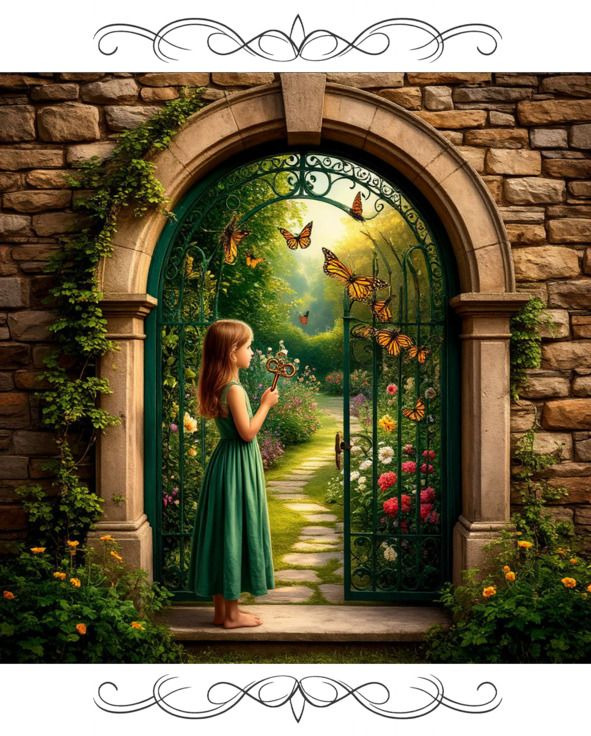
The Tale of the Gardener and the Stone Wall
In a faraway valley, where the sun gently kissed the earth and the wind whispered ancient secrets to the trees and meadow flowers, there bloomed a beautiful garden. Its keeper was a young woman named Diana. She was cheerful, open-hearted, and tenderly cared for her green charges. Every morning she watered them, shielded them from the sun’s harsh rays, and even spoke to them as if they were alive.
But there was one trouble: no matter how many new plants Diana sowed, no matter how carefully she tended them, prickly weeds always crept into her garden. They strangled her roses, stole water from the violets, and their roots ruined the soil. Time and again, she pulled them out — but sooner or later, the story repeated itself, and new thorns sprang up among her flowers.
One day, an old and experienced Gardener passed through the valley. Seeing the downcast girl, he surveyed the garden with keen eyes. Understanding the situation, he asked:
— “Why do you allow weeds to grow in your garden?”
“I do not allow them!” exclaimed Diana. “I spend all my free time fighting them, but they grow as if I had never touched them at all!”
The Gardener beckoned her closer.
— “Look here, young sprout. Do you see that wall? It is almost crumbled — no wonder you hadn’t noticed. Your fence has grown unreliable. Seasons of wind and rain have taken their toll; now anyone can enter without permission.”
Diana sighed.
— “But I cannot be cruel! If I build the wall too high, how will the bees and butterflies ever reach my garden?”
The Gardener smiled gently.
— “The wall is not to keep everyone out. It is to decide who may enter. There can be gates — but only you will hold the key.”
The young gardener pondered. She feared that denying plants a place in her garden would make her cold and unfeeling.
— “What if I make a mistake?” she whispered. “What if I mistake a rare flower for a weed?”
The Gardener carefully lifted a wilted rose petal, destroyed by the weeds. A tiny drop of water gleamed upon it.
— “Do you see this dewdrop?” he asked. “If you hold it in your palms, it will evaporate before nourishing anyone. But if you gather many drops into a pitcher, there will be enough for the flowers, the bees, and yourself. Your garden is like these hands. Without boundaries, all the moisture will go to those who only take, giving nothing in return.”
He brushed his fingers over the shriveled leaves of a violet, smothered by thorns.
— “Better one bud left unopened than a hundred flowers destroyed.”
And Diana understood. She gathered strong stones and began building a new wall. Not too tall, but firm and enduring. She left an arch for those she wished to welcome into her garden: the bees, friendly birds, kind travelers. And when thorns appeared again, she first observed them — judging whether they were harmful — before allowing them to stay. The weeds tried to slip through gaps, but the wall held. Some even pretended to be beautiful flowers, but Diana learned to recognize them before they took root.
And then her garden blossomed as never before. Diana often remembered the Gardener with gratitude. His wisdom had taught her to think first of herself, ensuring that uninvited guests could not enter her threshold without her permission.
Working with the Tale
A Garden Diagnosis
In a faraway valley… there bloomed a beautiful garden. Its keeper was Diana, cheerful and tender with her green companions. Yet no matter how many new plants she sowed, prickly weeds always crept in, choking her roses and stealing water from the violets. Time and again, she pulled them out, but the cycle repeated.
Step 1: Take stock of your “garden”
Take a notebook. Draw a diagram or simply make three lists:
My Flowers (what nourishes me):
— Example: “Meeting a friend,” “Reading books in the evening,” “Solo walks,” “My hobby — embroidery.”
My Weeds (what drains me):
— Example: “Interacting with a constantly complaining colleague,” “Feeling guilty when I say ‘no,’” “Mandatory family gatherings that leave me exhausted.”
The State of My Wall:
— Where in my life do I have strong boundaries?
— Example: “I do not answer work messages after 8 p.m.”
— Where is my wall broken, letting weeds slip in uninvited?
— Example: “I let family dictate how I spend my weekends.”
The Lesson of the Wise Gardener
One day, a wise Gardener passed through the valley.
“Why do you allow weeds to grow in your garden?” he asked.
“I do not allow them!” Diana exclaimed. “I spend all my free time fighting them!”
The Gardener pointed to the crumbling wall:
“Your fence has grown unreliable. Now anyone can enter without permission.”
Diana shivered.
“But if I build a high wall, how will the bees and butterflies reach my garden?”
The Gardener smiled gently:
“The wall is not meant to keep everyone out. It exists to decide who may enter. There can be gates — but only you will hold the key.”
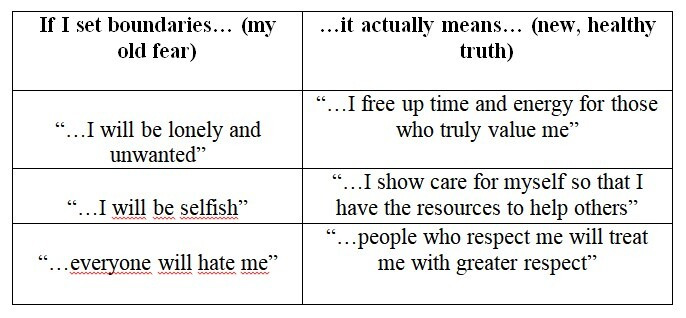
Step 2: Dispel the Main Myth About Boundaries
The fear of becoming “bad” or “cold” is the greatest obstacle. Let’s rewrite your beliefs.
Exercise: Wall vs. Prison
The Philosophy of Dew and Stones
Diana whispered,
— “What if I make a mistake? What if I mistake a rare flower for a weed?”
The Gardener gently lifted a wilted rose petal, destroyed by the weeds, a single drop of water clinging to it.
— “Do you see this dewdrop? If you hold it in your palms, it will evaporate before it can nourish anyone. But if you gather many drops into a pitcher, there will be enough for the flowers, the bees, and yourself. Your garden is like these hands. Without boundaries, all the moisture will go to those who only take, giving nothing in return.”
Step 3: Identify Your “Dew” and Begin Building Your “Wall”
— What is my “dew”? Which resources are limited?
Example: “My emotional calm,” “Energy after work,” “Weekend time,” “Finances.”
— Choose three “stones” for your wall. These are your new rules. They should be simple and concrete.
Examples:
— “When someone asks me for something, I say: ‘I need to think before agreeing immediately.’”
— “I do not stay at work overtime unless it was agreed upon and compensated in advance.”
— “I end the conversation if insults or humiliation are directed at me.”
Building the Wall and Tending the Garden
Diana took strong stones and began building a new wall — not too tall, but sturdy. She left an arch for the bees, birds, and kind travelers. And when thorns appeared again, she first observed whether they were harmful. Weeds tried to sneak in, but the wall held firm.
Step 4: Practice and Keep a “Gardener’s Journal”
Building a wall is a skill. It requires practice.
Technique: Gardener’s Journal (1 week)
(Here you would continue with instructions for journaling, noting boundaries, successes, and observations in your garden metaphor.)
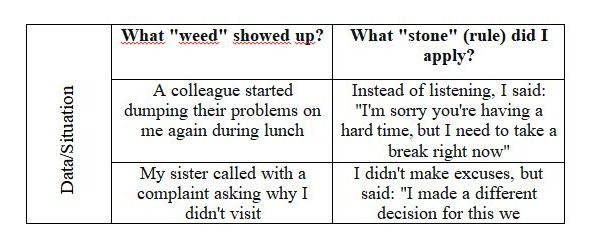
Your Plan for Establishing Personal Boundaries
— Diagnosis (once a month): Return to Step 1. Your “garden” changes over time, and your lists of “weeds” and “flowers” may change as well.
— Micro-step each day: Apply at least one of your “stones” (rules) in an appropriate situation.
— Analysis (5 minutes in the evening): Make a brief entry in your “Gardener’s Journal.” Ask yourself: “Where today was I a good keeper of my garden?”
Remember: Your garden is unique and irreplaceable. It is the constitution of your inner well-being. You are not obliged to let everyone enter. Your soul, your time, your energy, and your feelings form a one-of-a-kind ecosystem. Only your special “flowers” grow there — your dreams, talents, and joys — and there are your own “weeds” as well — weaknesses, fatigue, doubts. Comparing your garden to your neighbor’s is like comparing an apple blossom to a cactus. It is meaningless and destructive.
We often imagine boundaries as a fortress wall: tall, cold, and lonely, meant to repel everyone. This mindset leaves us feeling isolated, guilty for being “cruel,” and ultimately swinging between two extremes: throwing the gates wide open (allowing everyone in) or slamming them shut (depriving ourselves of support). Boundaries are not a wall against the world — they are a filter for your happiness. You decide what and who nourishes your life. The key to the gate is always in your hands. This key is your right to choose and your word. No one can make you feel guilty, bad, or unworthy without your silent consent.
When you give away the key — allowing manipulation, waiting for approval, tolerating disrespect — you voluntarily leave your garden and become a wanderer at someone else’s gate. Your life is not a public park, where anyone can walk through, plucking flowers and leaving trash behind.
Your New Mantra
My garden is my sacred territory. I allow in only the light that nourishes my flowers. My key is in my hands, and I choose peace. I am the sole Keeper of my inner world. My soul is a blooming, unique garden. My boundaries are wise gates. I open them to sunlight and close them to storms. The key to my happiness is in my hand, and I give it to no one. Today and always, I choose to fill my life with that which makes me bloom.
Sonya and the Song of the Wind
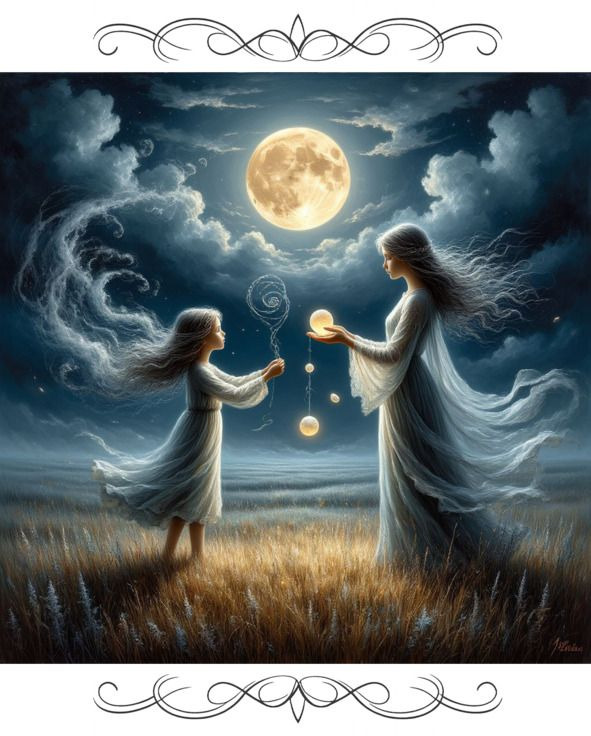
Once, long ago, there lived a woman named Sonya. She was like a river — always moving forward, carrying заботу for her home, her work, her loved ones. But lately her life had grown turbulent: her thoughts whirled like a storm, her heart pounded, and her shoulders bore an invisible weight.
Each morning Sonya awoke with the feeling that living through the day was like climbing a mountain too high and too steep. “I must manage everything,” she would think. “If I don’t finish it all, the tasks will pile up and one day bury me like an avalanche. And then everything will collapse.”
At night she lay awake, replaying the day, analyzing mistakes. By day she rushed, afraid to pause even for a moment. The light that once shone in her eyes now hid behind clouds of exhaustion. At times she felt as though she were wandering through fog — straining to run, yet tangled by the haze around her, which seeped inside and filled her head with a chaotic hum of disjointed voices.
One day, utterly worn out, Sonya walked into a field, far from the noise. She sat on the earth and closed her eyes, overcome with fatigue. The air was so fresh, so fragrant with meadow grasses, that she drifted into a light sleep.
Sitting there among the tall grass, she suddenly heard a quiet song.
When she opened her eyes, she saw a girl — so light, so airy it seemed that if she only lifted her arms, she would float away.
“Why are you so tired, Sonya?” the girl asked.
Sonya took a breath. “I feel as though I can’t cope. The storm in my head won’t let me live. The more I plan, the less I accomplish.”
The Wind-Girl smiled. “How often I see people like you. You spun the web yourself and then became entangled in it. You created the storm, and now it commands its creator. These are your thoughts — they have made even your body stiff and tense. But your thoughts are not you. Would you like me to teach you how to tame them?”
Sonya nodded shyly, thinking, What could such a tiny creature teach me?
The Wind-Girl laughed, having guessed her thoughts, and Sonya blushed at how transparent her doubt was.
The girl gave her three gifts: a scroll, a stone, and a coil of silver thread.
“The scroll will show you your thoughts. The stone will show you your calm. The thread will show you your rhythm.”
Sonya unrolled the scroll and read what the storm had written in her mind:
I must be perfect, or I will disappoint everyone.
If I stop, everything will fall apart.
I never have enough time — time is against me.
“Tell me,” the Wind-Girl asked, “do you truly believe these? Are they really your thoughts — or did someone help you think this way? Let’s look closer.”
Sonya reflected. “It seems I try to do everything myself. I believed that if I became perfect, everyone would value me and I would be indispensable. And those who once rejected me would see how strong and capable I am and want to be with me.”
The little enchantress gave a soft, wistful laugh, her skirt whispering like a breeze. “How amusing you are. Who will love someone who turns herself into a doormat? You’ve confused everything. You are trying to make life comfortable — but not your own. People are not loved for their achievements or for doing everything flawlessly. That only makes them useful… like a kitchen towel.”
“Let’s practice,” she continued. “I’ll say phrases, and you repeat them. Listen to how they feel.”
Sonya nodded.
“When I rest, the world does not collapse.”
“There is time for work and time for rest.”
“I do what I can, and that is enough.”
“Rest gives me strength to move forward.”
“I choose what to do today.”
“How do these thoughts feel?” asked the Wind-Girl.
Sonya hesitated. “I felt uneasy at ‘I do what I can, and that is enough.’”
“I thought so,” the girl sighed. “We all fall into that trap.”
She handed Sonya the stone. “This teaches the body calm.”
She showed her how to hold it in her palm and breathe: inhale for four counts, pause for five, exhale for six. Sonya imagined the breath bringing light in and carrying shadows away. Her shoulders softened; her heart slowed.
“Use this when the storm draws near,” the young enchantress said.
Then she pointed to the silver thread. “This is your rhythm. Weave your day from it. Each time you complete a task, tie a knot. When there’s no space left for another knot, it’s time to stop.”
Sonya frowned in confusion, and the girl explained, “Choose three tasks — no more — and do them with love. Leave the rest to the wind.”
“Only three? And what about everything else?”
But the girl was already gone. Only the grass remained, singing with the Wind:
“Three are seeds. They will grow if you do not trample them with haste. Be light… like a girl, like me…”
When Sonya returned home, she began with her breathing. She sat, took the stone, felt its weight, and breathed as she had been taught. A voice in her mind whispered, You’re wasting time, but she corrected it aloud: “This is my calm.”
She chose three tasks: prepare dinner, answer one letter, take a walk. When her thoughts began to whirl again — You won’t manage it! — she closed her fist around the stone and said, “Stop. I choose what matters.” And the storm quieted.
The Wind-Girl had also taught her to release tension from her body. “Clench your fists as tightly as you can,” she had said, “then let go. Then your shoulders. Then your legs.”
Sonya practiced, feeling the heaviness fall away as though stones were slipping from her shoulders. Each evening she tended her body like a garden, watering it with calm.
A month passed, and Sonya noticed her home had grown quieter. She learned to say “no” to unnecessary tasks and “yes” to herself — a cup of tea, a book, a minute of silence. When the storm returned, she took the scroll and wrote: What is the storm saying? Is it true?
Sometimes she sang softly to herself, and her voice blended with the song of the wind.
Her loved ones noticed she smiled more often. “What has changed?” they asked.
“I am learning to be a river, not a storm,” she replied.
One day Sonya returned to the field. She wanted the Wind-Girl to be proud of her — and as if she had known Sonya would come, the girl appeared. They embraced like kindred souls.
“We all know our song,” said the Wind-Girl. “We are born with it in our hearts. But out of fear, we choose a life that is not ours, and we forget its words, its melody, the sound of our own voice. That is how we forget how to be children. Remember me — my youth, my lightness. And when you feel yourself forgetting your song again, take up the stone and the thread.”
Sonya looked at the gifts she now carried everywhere and smiled. She knew storms would still come, but she had her breath, her rhythm, and the strength to say, “Stop.”
Her light shone once more, and she carried it into the world — gently, yet with quiet certainty.
Working with the Story
This story is your personal guide to calm and awareness. For this practice you will need: one ordinary small stone (you may find it by the water or replace it with any small object), a notebook, a pen, 20–30 minutes of quiet, and your kind attention.
Diagnosing the “Storm”
Once there lived a woman named Sonya… Her life had grown turbulent: her thoughts whirled like a vortex, her heart pounded, and her shoulders bore an invisible weight.
“I must manage everything,” she thought. “If I don’t finish all my tasks, they will pile up and, sooner or later, bury me like an avalanche.”
Step 1: Catch Your “Storm” on the “Scroll”
Take your notebook. For now, we are not going to fight the storm. We are simply going to observe it from the outside.
1. Exhale and write.
Formulate and write down two or three of the main anxious thoughts currently circling in your mind.
For example:
— “I can’t keep up with everything at work and at home.”
— “If I stop now, everything will fall apart.”
— “I will disappoint my loved ones if I’m not perfect.”
2. Ask yourself:
“When and from whom did I first hear thoughts like these? In whose voice does my “storm’ speak — my parents’, my teachers’, my boss’?”
This question helps you separate inherited beliefs from your own true desires.
The Gift of the Stone: Returning to the Body
One day, exhausted, Sonya went out into a field… There she met the Wind-Girl, who gave her three gifts. The first was a small stone.
“Take this stone,” the girl said. “It teaches the body calm.”
She showed Sonya how to hold the stone in her palm and breathe: inhale for four counts, pause for five, exhale for six.
Step 2: The “Stone of Calm” Practice
Take your real small stone in your hand.
1. Sit comfortably.
Feel the support beneath your feet and your back.
2. Hold the stone in your palm.
Bring all your attention to its texture, its weight, its temperature.
3. Begin breathing in the 4–5–6–4 rhythm:
— Slow inhale for 4 seconds (imagine you are breathing in calm).
— Pause for 5 seconds (hold the breath, sensing stillness).
— Slow exhale for 6 seconds (imagine you are releasing tension, anxiety, and haste).
— Brief pause for 4 seconds before the next inhale.
4. Repeat for 5–7 cycles.
If your attention drifts into thoughts (and it will), gently — without irritation — guide it back to the sensation of the stone in your hand and the rhythm of your breath.
Practice this twice a day for 3–5 minutes. This is your anchor — bringing you back from the whirlwind of thoughts into a calm and steady body.
The Gift of the Thread: Choosing What Matters
Then the Wind-Girl pointed to the thread.
“This is your rhythm. Weave your day from it. Choose three tasks — no more — and do them with love. Leave the rest to the wind.”
Sonya was surprised. “Only three? What about everything else?”
The Wind sang in reply: “Three are seeds. They will grow — if you do not trample them with haste.”
Step 3: The “Three Seeds” Practice
Each morning (or the evening before), do this simple exercise.
1. Take your notebook and write:
My Three Seeds for Today.
These are the three most important actions that will move you closer to your goals — or to your inner calm.
For example:
— Prepare the report (by 2:00 p.m.).
— Take a 30-minute walk in the park.
— Call my mother.
Бесплатный фрагмент закончился.
Купите книгу, чтобы продолжить чтение.